Economy
A $43.9 billion security deal
CrowdStrike agreed to buy Zscaler in an all-stock deal valued at about $43.9 billion; ZS rose 17.67% and CRWD fell 8.92% (CappNotes, Nov 23).
 By Simón Levy · Washington, D.C.
Mexico’s attorney general said “for now.” Washington has already requested his extradition. Here is the full reasoning, with dates, laws and precedents.
The future now unfolding, written before it happened. Here they all are.
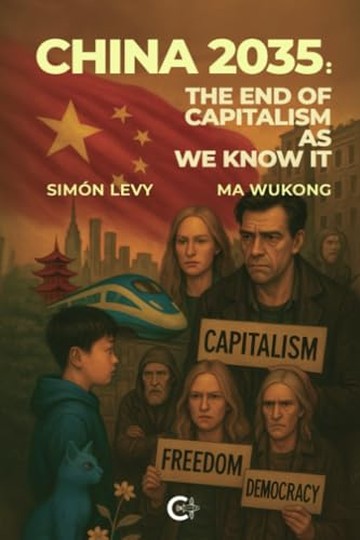
It is not a book about China. It is a book about your future. In English.

Building a future that delivers more than it promises. In Spanish.

From the wasteful state to the generator of public wealth. In Spanish.
Check people, companies, phone numbers and accounts against the U.S. Treasury, Mexico’s SAT and UN lists before you pay, sign or hire.
The board’s SEC filing says senior U.S. officials told it Huang poses no national security risk. Wall Street had its best day since April 2025, and traders priced a December Fed hike at 98%.
Mexico in Spanish, Brazil and Latin America in Portuguese, and the United States in English. No voice: press play and read.
Download the reel ↓The problem, simply.The most valuable chipmaker in the world lost its founder as CEO this month over reports that he was the target of a foreign intelligence effort. On Monday it hired him back. What changed was not the evidence. What changed, according to the company’s own filing, was a message from Washington.
A. What the board did.In a press release attached to a Form 8-K filed with the Securities and Exchange Commission on November 23, Nvidia said its board “voted unanimously” to reinstate Jensen Huang as president and chief executive officer and as a director, “effective immediately.” Harvey C. Jones stays on as board chair. Colette Kress, who ran the company as interim CEO, returns to her job as chief financial officer.
B. Why it says it did it.The key sentence is short. The board “received input from senior levels of the United States government,” and “based on that input” it is “confident that Mr. Huang’s reinstatement poses no national security risk.” The filing names no agency and no official. Jones said in the release that the board has “every confidence in Jensen.” Huang said he takes the job back “with the greatest humility.”
C. What stays open.The same filing says the committee of independent directors formed to investigate reporting that Huang was the target of a foreign intelligence effort “will proceed to conclusion,” with independent counsel. It creates a new National Security and Export Control Committee of independent directors and opens a search for a chief compliance officer who will report to the governance committee. It says Nvidia will keep cooperating with “ongoing government investigations and inquiries.” Tom’s Hardware reported on November 23 that a criminal investigation is examining whether Megaspeed, a former Nvidia customer, helped bypass export controls on AI chips, and that Huang is due before House committees behind closed doors on December 1.
The market’s verdict.Wall Street did not wait for the investigations. Nvidia closed up 31.48% at about $165.05, after a 14.01% fall to $125.53 on Friday. The Nasdaq Composite rose 6.51% to 24,089.56 and the Dow gained 1,447.98 points, or 3.01%, to 49,595.31. In the S&P 500, 417 stocks rose and 83 fell, and technology gained 8.97%, according to a closing recap that compiled CNBC, AP and FRED data. The VIX fear gauge fell 25.83% to 26.62. Chip stocks moved as one: Taiwan Semiconductor rose 14.08%, Micron 19.04%, Dell 20.46%.
The names.President Trump told CNBC he “convinced” the board, according to the same recap; the filing itself only speaks of “input.” On Sunday, Bessent said on CBS’s Face the Nation that Washington had been in touch with Nvidia’s temporary management, lead directors and lawyers, and that “we do need answers,” per Tom’s Hardware’s account of the interview. Days earlier he had said the new CEO should come from outside the company. On Sunday he said Huang is now on the outside. Huang has not been charged with any crime and is presumed innocent, and the filing says he supports the board’s inquiry.
Two facts in the filing pull in opposite directions. The board says Washington told it Huang is no national security risk. The board also says its own investigation of a foreign intelligence effort aimed at him is not finished. A company can believe both. An investor reading the 8-K has to price both.
The second-order effect is political. If “input from senior levels” was enough to bring back a CEO, other boards facing export-control scrutiny now know where the decisive conversation happens. The December 1 hearing is the first place Congress can ask who gave that input, and in what form.
Who gains, who loses.Shareholders gained on Monday. Kress, who steered the company through two weeks of turmoil, goes back to the finance office. The independent directors gain new duties: two committees and a compliance chief who answers to them, not to the CEO. Washington gains leverage: a company that credits the government for its leadership decision has every reason to keep that government satisfied when export licenses come up for renewal.
What to watch.Dell and HP report after Tuesday’s close, a direct read on AI server demand. U.S. markets close Thursday for Thanksgiving and stocks close at 1 p.m. Eastern on Friday. The S&P 500 is still below where it started last week’s 8.6% slide.
See everything it can do for you and how much of your day it gives back. From your health to your personal safety.
Open Es PosibleThe full investigations, my podcasts and all my apps free from the Founder tier up.
Join on PatreonThis work is paid for by its readers. Not a government, a party or an advertiser.
Join hereNo polls here. Only votes already cast, my forecast and, from election night on November 3, the real result, state by state. The map paints itself with each result.
| State | Votes cast | Registered Democrats | Registered Republicans |
|---|
Where today’s U.S. stories land.
From the CEO’s exit to the December hearing.
Amid reporting that he was the target of a foreign intelligence effort; Colette Kress takes over.
Nvidia’s board says it does not intend to reinstate Huang, per NPR.
Close at $125.53; Trump says Huang should come back.
Bessent on CBS; days earlier he wanted an outside CEO.
Unanimous board vote after U.S. government input; stock +31.48%.
Huang before House committees, per Tom’s Hardware.
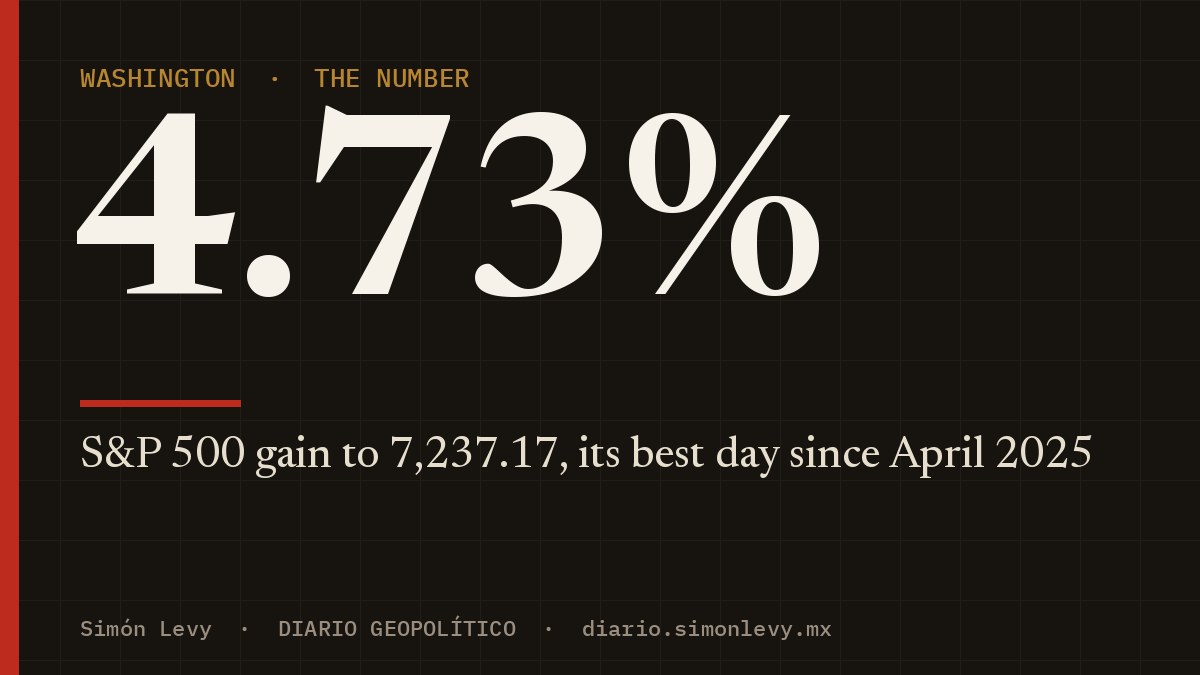
Calculation: the S&P 500 closed Friday at 6,910.39 after falling 8.6% on the week, which puts the prior week’s close near 7,560.6. Monday’s 4.73% gain took it to 7,237.17. Getting back to 7,560.6 requires another 4.47%. Monday’s historic day recovered a little more than half the loss.
Fuentes: CappNotes (AP data), Nov 23, 2026; STL.News (Sterling Capital, AP), Nov 23, 2026; Diario Geopolítico, Nov 23, 2026 edition; calculation by Diario Geopolítico.“I will sign a Presidential Directive ordering the DOJ to seek the death penalty for child murderers, as well as rapists and human traffickers who kill their victims. My order also directs the Attorney General to expedite the execution of federal death sentences. Once juries have spoken, capital punishment will be swift and certain.”
President Donald Trump, November 23, 2026
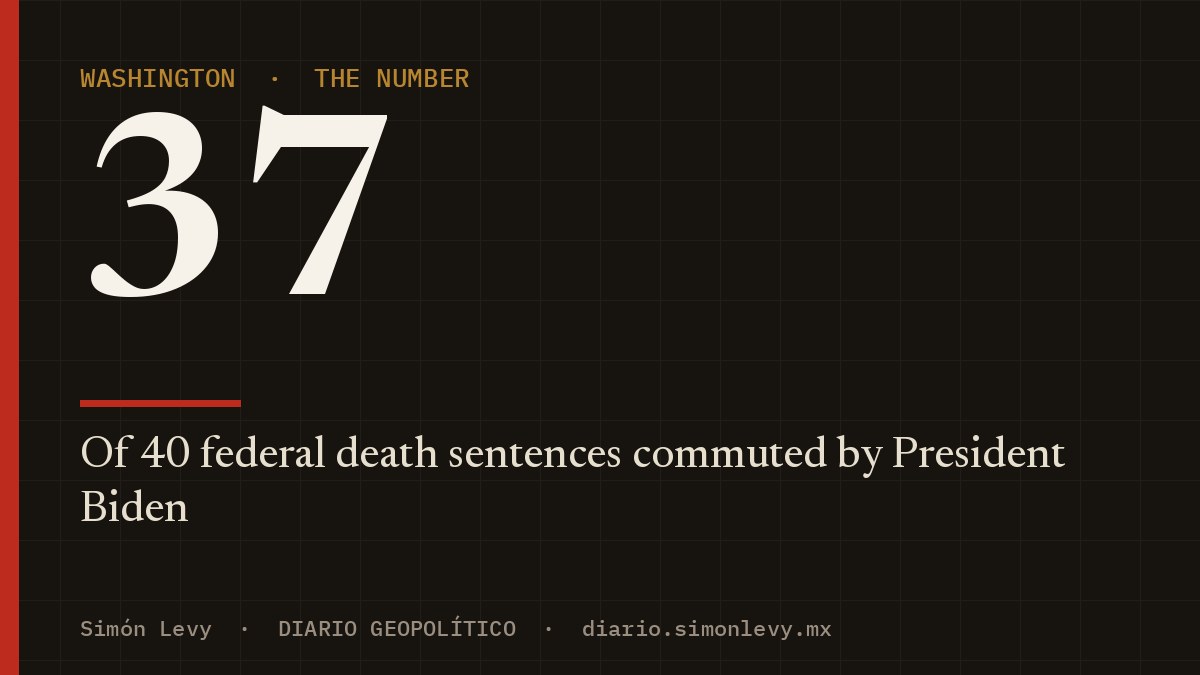
What it does.It directs federal prosecutors to seek the death penalty in cases involving the murder of a child, and in murders committed during rape, sexual abuse, child sexual exploitation, sex trafficking, kidnapping or human trafficking. It also orders the Attorney General to expedite executions of existing federal death sentences.
The problem, simply.Every federal agency runs on a temporary funding law that expires after December 11. The war with Iran, which began on February 28, is paid out of that same money. Democrats won both chambers on November 3, but they do not take control until January 3. So the people who must keep the government open are the ones voters just replaced.
A. What was said.On CBS’s Face the Nation on Sunday, November 22, House Democratic leader Hakeem Jeffries, in line to become Speaker, said Washington needs to end “this reckless and costly war of choice in Iran,” according to Gulf News and Iran International. Political.org reported on November 19 that Sens. Tim Kaine of Virginia and Tammy Duckworth of Illinois are drafting language to bar war funding, and that Sen. Chris Van Hollen of Maryland urges Democrats to refuse a bill that does not end the war.
B. The other side.Senate Majority Leader John Thune of South Dakota called war-funding limits “not a realistic ask” and warned they would lead to a shutdown, per the same report. Sen. Susan Collins of Maine, who chairs Appropriations, opposes the war but says a stopgap is the wrong vehicle. Rep. Rosa DeLauro of Connecticut favors a short extension into February. Spending bills need 60 votes in the Senate.
C. The calendar.Lawmakers left for Thanksgiving and return November 30, leaving nine working days before the deadline. Speaker Mike Johnson, Thune, Senate Democratic leader Chuck Schumer and Jeffries will have to agree on any short-term measure. Schumer has not said whether he would risk a shutdown. The House Freedom Caucus wrote Johnson and Thune on November 16 with its own demands.
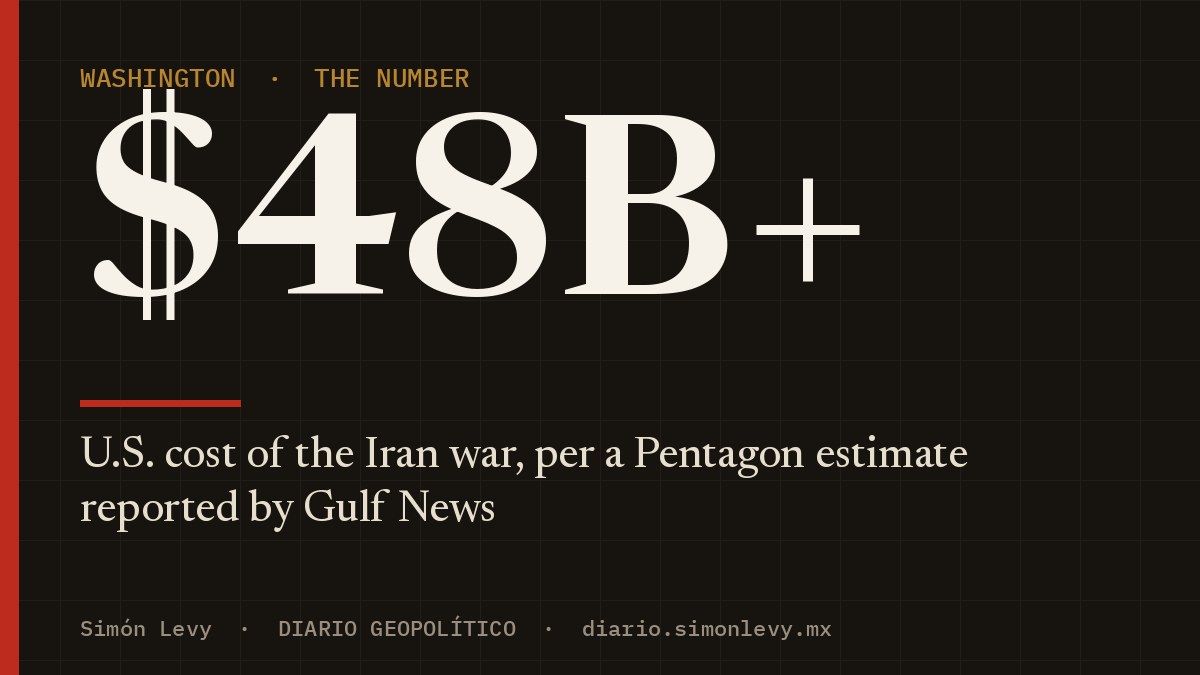
The number behind the fight.Gulf News reported a Pentagon estimate that the war has cost the United States more than $48 billion. From February 28 to November 20 is 265 days. That works out to about $181 million a day. Seventeen days remain from November 24 through December 11, or roughly $3.1 billion. That is the amount a war-funding bar would have to stop, and the amount Republicans would have to defend in a lame-duck vote.
Who gains, who loses.A short extension into February, the DeLauro option, hands the war-funding question to the new Democratic majority with full committee control. A full-year stopgap, which House Appropriations Chair Tom Cole floated in September, keeps it with the current majority. The date in the bill decides which Congress owns the war budget.
The Iran war has become the first test of whether a lame-duck Congress will bind the next one. Watch the end date in any stopgap. If it says February, Democrats get the war vote. If it says September, they do not.
A 4.73% rally and a 98% chance of a hike.
The problem, simply.The Federal Reserve raises interest rates when it thinks prices are rising too fast. This year it is doing something it rarely does after cutting: it is talking about going back up. On Monday, while stocks posted their best day since April 2025, the futures market moved to near certainty that the Fed will raise rates on December 9.
A. What moved.A closing recap compiling CNBC, AP and FRED data put CME FedWatch odds of a quarter-point hike at the December 8-9 meeting at about 98%, up from about 88% on Friday. The dollar index rose 0.52% to about 104.35. Gold futures rebounded 3.38% to $3,634.30 after a weekly drop of nearly 9%. West Texas crude fell 3.88% to $80.17, its lowest close since August 26, as Libya restarted its Sharara pipeline.
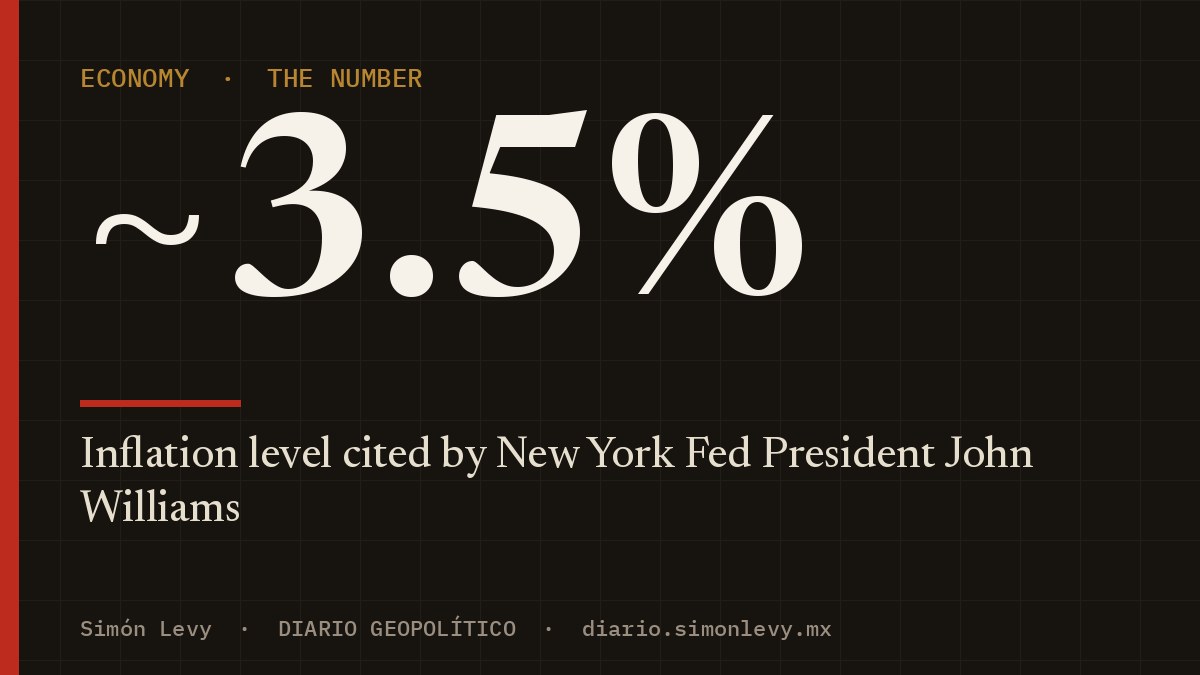
B. What the Fed is saying.Williams said inflation near 3.5% leaves the Fed with “work to do,” according to the recap. On November 18, minutes of the October 27-28 meeting showed “almost all participants” judged further hikes would likely be appropriate, and that a move larger than a quarter point could be needed if inflation worsened, per investingLive. Waller told CNBC that week, “You have to go 50 in December.” San Francisco Fed President Mary Daly called inflation “too high for too long.” Governor Michael Barr said he would support more hikes if the economy evolves as expected.
C. Why it matters now.Waller said about 70% of core services components are running above 3%. That is the part of inflation driven by wages, rents and insurance, which does not fall when oil does. Monday showed it: crude dropped almost 4% and hike odds still rose.
The bond market.The 10-year Treasury yield ended Monday at 4.92% and the 2-year at 4.63%, according to FRED data cited by 247 Wall St. Sources disagreed on the day’s change, so we report only the level. The 30-year was near 5.29%.
This week.The Conference Board releases consumer confidence at 10 a.m. Eastern on Tuesday, with Case-Shiller home prices at 9 a.m. Dell, HP, Workday and Autodesk report after the close. Markets close Thursday for Thanksgiving. Stocks close at 1 p.m. and bonds at 2 p.m. Eastern on Friday.
A market that cheers a CEO’s return while pricing a rate hike with near certainty is a market betting earnings outrun borrowing costs. That bet works for the largest AI companies. It is harder for small firms: the Russell 2000 rose 3.40%, less than the Nasdaq’s 6.51%.
Treasury hits Iran’s exchange houses.
The problem, simply.A blockade stops ships. It does not stop money. Iran still has to pay for imports and collect for whatever it sells, and it does that through exchange houses and front companies abroad. On Monday, Washington went after those.

A. What Treasury did.On November 23, the Office of Foreign Assets Control designated more than two dozen individuals and entities under Operation Economic Outcast, the campaign launched on August 24. VOZ listed 17 entities and 8 individuals, including Mellat Exchange Company, Mina Fashki and Partners Exchange Company and the Iran Center for Exchange of Currency and Gold, which Washington estimates handles transactions worth tens of billions of dollars a year. Intermediaries named include Dubai-based Dexterous Global DMCC and Turkey’s Bogazici Gumrukleme. Treasury Secretary Scott Bessent called the network “the last financial lifeline of a bankrupt regime.” Xinhua reported Treasury warned that facilitators could be cut off from the U.S. financial system.
B. The legal tools.According to VOZ, the Iran Center was designated under Executive Order 13902 and H N B Trading Co LLC, tied to an entity linked to Iran’s Armed Forces General Staff, under Executive Order 13224, the counterterrorism authority. Designation is an administrative action, not a criminal conviction.
C. The sea.Iran International reported on Monday, citing Ynet and i24, that more than 14 tankers are gathering near Kharg Island, based on satellite imagery and vessel tracking that it said was not independently confirmed. President Trump told Fox News on Sunday that if they test the blockade they will be “at the bottom of the sea.” He also said he is inclined to resume strikes after the New Year if there is no deal. The Joint Maritime Information Centre counts seven tankers hit in the strait since November 16, and Hormuz traffic is 65% below prewar levels, Gulf News reported.
The names.Iranian Foreign Minister Abbas Araghchi said Iran would break the blockade. Deputy Foreign Minister Kazem Gharibabadi called it “an act of war” and said the window of diplomacy is still open. Egypt’s foreign minister said Cairo is working with Qatar, Turkey, Saudi Arabia and Pakistan on talks. Central Command, under Adm. Brad Cooper, had not commented on Sunday’s tanker incident near Chabahar.
Monday’s sanctions are the financial half of the blockade. If tankers slip through, the next fight is over who gets paid and where. That is why the targets are exchange houses in Dubai and Hong Kong, not ships. The weak point is enforcement in jurisdictions that do not share Washington’s list.
Hegseth’s Caracas pact, dated Nov 18.
Said plainly.We searched official and wire sources and found no new U.S. policy action toward the Americas dated November 22 or 23. The most recent is from November 18, and we report it with that date.
The problem, simply.In January, a U.S. operation removed Nicolás Maduro, who now awaits trial in New York. Ten months later, the Pentagon chief went to the same presidential palace to sign a military agreement with the interim government. The question for Washington is what it is buying, and from whom.
A. Caracas.According to the Americas Society/Council of the Americas, citing AP and Reuters, Hegseth met Rodríguez and Defense Minister Gustavo González López at the presidential palace on November 18 and signed a military cooperation agreement covering joint training, intelligence sharing and “removing threats.” He was the third Trump cabinet official to visit and the first since the January operation. Foreign Minister Oliver Blanco and financier Alejandro Betancourt, whose private company was part of the August U.S.-Venezuela oil deal Hegseth helped negotiate, were present.
B. Bogotá.The same day, Hegseth met Colombian Defense Minister Jorge Eduardo Mora López and was set to deliver a transport aircraft to Colombia’s armed forces, per AS/COA. In September, Trump said Colombia was poised to resume its place as Washington’s foremost security partner with Abelardo de la Espriella as president, InSight Crime reported.
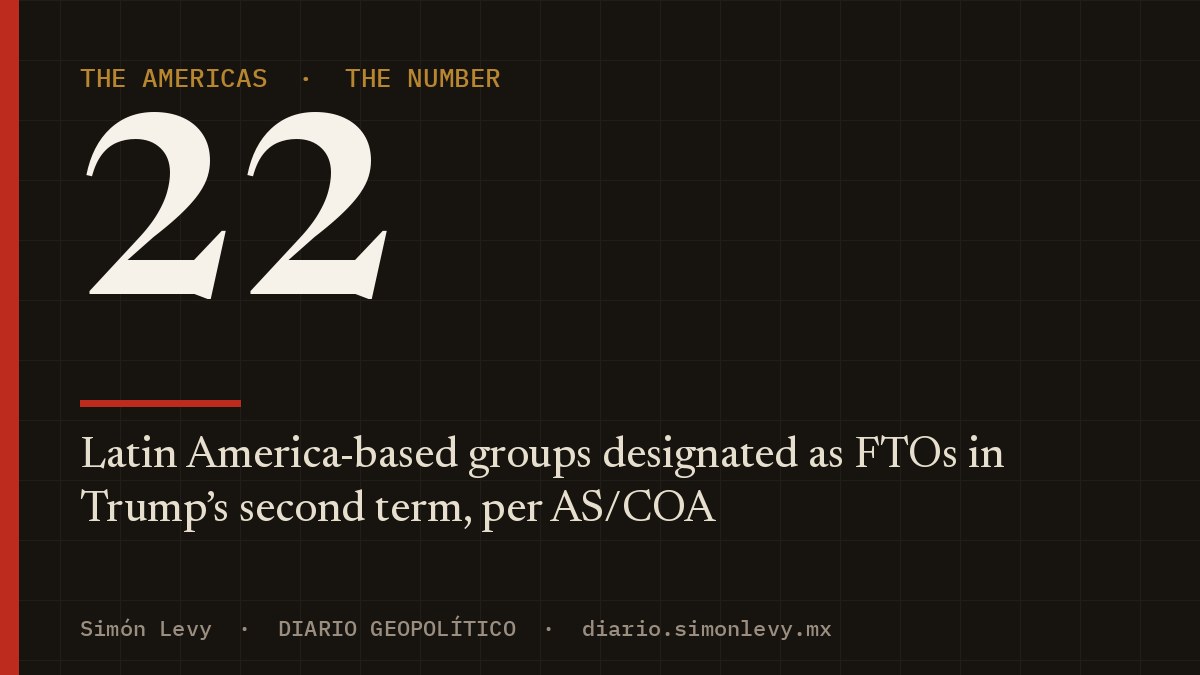
C. The pattern.On November 13, Secretary of State Marco Rubio designated three Guatemala-based groups as terrorists, with Los Lorenzanas listed as a Foreign Terrorist Organization. On November 16, the Justice Department announced the arrest in Atlanta of former Honduran consul general Ada Eucedo Serrano and her sons, the first charges ever brought under the 2023 Foreign Extortion Prevention Act, per AS/COA. They are charges, not a verdict.
The detail that matters.Betancourt’s presence ties the defense pact to the oil deal. When a defense agreement and a private oil contract share a negotiator and a room, the Foreign Corrupt Practices Act and its new companion, FEPA, are the U.S. laws that decide whether money moved properly on both sides.
The hemisphere strategy now runs on two lists: who is a terrorist and who is a partner. Venezuela moved from the first column toward the second in ten months. Companies that operate there need to track both lists, because they change faster than contracts do.
What was said.Godoy told reporters at Mexico’s Chamber of Deputies on November 23 that, for now, he will be tried in the country, and confirmed that a U.S. extradition request exists. The hearing on whether to formally charge him was set for November 28.
Tap each route. The first is what Mexico’s prosecutors say; the other two already exist, and one was used twice in 2025.
Sources: 1978 Mexico-U.S. extradition treaty and 1997 protocol; Mexico’s Security Cabinet, transfers of February 27 and August 12, 2025; Ovidio Guzmán case (2023). Timelines for routes two and three are this edition’s estimate.
Mexico’s narco-party, Morena, is terrified of “Chapo” Isidro’s extradition to the United States.
They know he is a living witness who could testify that drug cartels financed the presidential campaign of López Obrador and Morena.
Such testimony could pave the way for Morena to be officially designated as a narco-political organization.
Simón Levy
What is not proven.No court has found that a cartel financed López Obrador or Morena, and he has always denied it. The foreign terrorist organization designation has never been applied to a political party.


Paisano launch posters, in Spanish and English.
How it works.Cónsul gives the guidance and Trilex handles the filings. Legal return routes such as TN or H-2 visas, family petitions or waivers depend on each case and do not apply when there are crimes. Every case is unique.
Heart health, memory and two trials.
The problem, simply.There is no cure for Alzheimer’s disease. So researchers ask whether changing daily life, such as exercise, diet, social activity and closer health checks, can slow memory decline in people at risk. U.S. POINTER is the largest American trial built to test that.

A. What the trial did.Participants were older adults at higher risk of cognitive decline: sedentary, with poor diets or heart risk factors. They were assigned to a structured program with physical activity, diet, social and cognitive engagement and health monitoring, or to a self-guided version, Fox Television Stations reported on November 19 from a UC Davis Health release.
B. What it found.The structured group improved more on body mass index, diastolic blood pressure, cholesterol and resting heart rate. The research team connected those improvements to better cognition. The benefit was reported as consistent for men and women, for people younger and older than 70, and for carriers and non-carriers of APOE4, the gene variant most tied to Alzheimer’s risk. The report gave no effect sizes for cognition.
C. The other trial.On March 23, JAMA Neurology published a multicenter randomized trial in older adults with a family history of dementia or self-reported memory complaints. Exercise, intensive control of cardiovascular risk factors, or both “did not result in statistically significant differences” in cognitive improvement over 24 months. The two studies differ in design and population, so they do not directly contradict each other.
Three levels of evidence.Strong: controlling blood pressure is good for the heart and the brain’s blood supply; this is established medicine. Moderate: multi-part lifestyle programs can produce modest cognitive gains in people at risk, as earlier U.S. POINTER results reported. Preliminary: that the heart improvements themselves explain the cognitive gains; the new report shows a link, not a mechanism.
What it does not say.It does not say any pill, supplement or peptide protects memory. None was tested. Products marketed online for “brain longevity,” including peptides such as BPC-157 or semax, are not FDA-approved for cognitive decline or any brain use.
Questions for your doctor.What is my blood pressure trend over the last year, not just today? Are my cholesterol and blood sugar at target for my age? Is there a supervised exercise or nutrition program my insurance covers? Should I be screened for memory changes now, as a baseline? These are the levers the trial measured, and each one has an established medical answer.
What I said, when I said it, and what happened.
Proof: Resolved by the 2028 Republican nomination. →
PendingProof: AP projected the Senate for Democrats on election night. After AP called Alaska for Mary Peltola on November 17, the incoming Senate stands at 56 Democrats to 44 Republicans (OPB, Nov 17, 2026), with Michigan Democratic. →
MissedProof: Called the House: AP projected Democratic control on November 4. The range fell short: NBC News estimates 258 Democratic seats and CBS News up to 259, with 231 already projected. →
Called itProof: He landed in Opa-locka, Miami, and publicly thanked Javier Milei.
Called itMy books, my courses and the tools I made so you can understand, protect yourself and earn. Free for my Patreon community.
Escudo, Courses, Longevity, Cónsul, CIES and Tratado, together in one place. Installs straight from your phone’s browser.
Open PosibleCheck people, companies, phone numbers and accounts against the U.S. Treasury, Mexico’s SAT and UN lists before you pay, sign or hire.
Check nowLearn to earn with artificial intelligence and your own talent. We give 100 scholarships every month.
EnrollIt is not a book about China. It is a book about your future. In English.
Building a future that delivers more than it promises. In Spanish.
From the wasteful state to the generator of public wealth. In Spanish.
Join my Patreon. That is where I publish what I publish nowhere else.
Join on PatreonEverything else that matters today, in brief.
CrowdStrike agreed to buy Zscaler in an all-stock deal valued at about $43.9 billion; ZS rose 17.67% and CRWD fell 8.92% (CappNotes, Nov 23).
WTI closed at $80.17, its lowest since August 26, as Libya restarted its Sharara pipeline (CappNotes, Nov 23).
Taiwan’s Taiex rose 2.16% after a record 17.5% weekly drop (CappNotes, Nov 23).
Markets close Thursday for Thanksgiving; stocks end at 1 p.m. and bonds at 2 p.m. Eastern on Friday (CappNotes, Nov 23).
An ADNOC Logistics tanker was attacked; a Jordanian sailor is missing and the UAE and Oman are searching (Gulf News, Nov 22).
A U.S. official told CBS the Bahrain attacks caused no damage to U.S. forces; it was the fourth attempt in about a week (Iran International, Nov 22).
Trump nominated Kara Frederick as ambassador to Bolivia, a post vacant since 2008 (AS/COA, Nov 18).
OFAC sanctioned three people and two Cambodia-based firms tied to the Prince Group and Myanmar’s DKBA on Nov 19 (Steptoe, Nov 23).
On Sunday, November 22, Treasury Secretary Scott Bessent said on CBS that Washington would see which level of Nvidia knew about the chip sales under investigation, and whether it went to the top, according to Tom’s Hardware. On Monday, November 23, Nvidia filed a Form 8-K saying senior levels of the U.S. government gave input that left the board confident Huang poses no national security risk.
Neither document answers the other. The 8-K names no agency, no official and no written finding. It also says the board’s own investigation into a foreign intelligence effort aimed at Huang “will proceed to conclusion,” and that Nvidia keeps cooperating with government investigations.
That matters because statements in an 8-K fall under federal securities law, including Rule 10b-5. If the input was oral and informal, it now carries the weight of a public disclosure that helped Nvidia regain nearly $1 trillion in market value in one session, per a closing recap of CNBC and AP data. The closed-door House appearance on December 1 is the first forum where members can ask who in the government spoke to the board, and what they said.