Washington
No probe of Huang
Attorney General Todd Blanche said Wednesday he won’t investigate Jensen Huang; asked if he had, he said “For what?” (Democracy Now, Nov 25).
 By Simón Levy · Washington, D.C.
It said no twice in the Inés Gómez Mont case. How Interpol decides, why the Mexican government’s own words weigh in Lyon, and the path for anyone facing a fabricated warrant.
The future now unfolding, written before it happened. Here they all are.

It is not a book about China. It is a book about your future. In English.

Building a future that delivers more than it promises. In Spanish.

From the wasteful state to the generator of public wealth. In Spanish.
Upload your lab results and get a diagnosis and a protocol built for you.
Two days after USAID posted its internal files, researchers have mapped what is in them: takedown requests to Facebook, a draft deal to flag election “spoilers,” an ad-blacklist proposal and a guide that offered Georgia as a model for Latin America. The Daily’s library lists every finding and what it does not prove.
Mexico in Spanish, Brazil and Latin America in Portuguese, and the United States in English. No voice: press play and read.
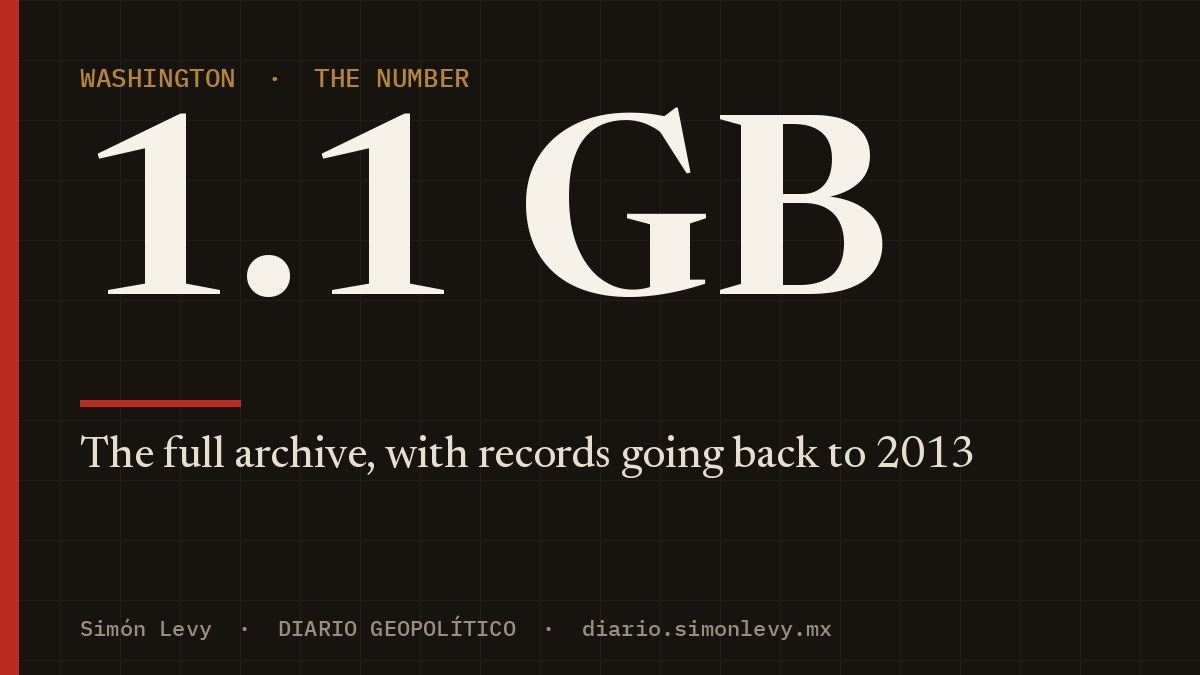
Download the reel ↓Where things stand.USAID posted the “USAID Files” on its website on Tuesday, November 24: about 1.1 gigabytes of emails, memos, briefings, spreadsheets and training videos going back to 2013, many from the Biden years. The Boston Report counts 248 files on the USAID page; Reclaim The Net has indexed 245 documents and made them searchable. The gap has not been explained.
1. Takedown requests.In July 2022 a USAID official joined the National Democratic Institute in asking Facebook to remove posts and suspend a page that allegedly threatened a partner organization in Libya; follow-up emails indicate two pages came down. In August 2022 a USAID manager asked Facebook to remove a post that named 38 employees of a Sudanese partner and falsely called them CIA operatives.
2. Defund, downrank, deplatform.An August 2022 concept note from the Global Disinformation Index proposed working with USAID and the platforms to cut ad revenue, reduce visibility and remove the worst offenders in Moldova, Zambia and Armenia. Reclaim The Net reports that an intelligence official made the introduction and that USAID then gave GDI 10 countries to focus on. Global Disconnect notes the documents do not establish that the intelligence community directed GDI’s blacklist.
3. Election “spoilers.”A draft deal with Facebook had the U.S. sharing an annually updated list of “countries of concern” with the company.
4. The list the State Department opposed.USAID wanted Google to favor approved outlets on a private “inclusion list” run by trusted third-party implementers. Inside the State Department, the idea met opposition over free-expression concerns.
5. Keep it quiet.In a July 8, 2024 legal briefing, an agency lawyer warned that the work with Big Tech could look like coercion and told staff to keep it out of the Washington Post. Reclaim The Net reports the White House told agencies not to be dissuaded. A September 2024 legal FAQ encouraged continued engagement but warned against coercion that would violate the First Amendment.
22 findings, from 2021 to this week. Each one says what the document shows and what it does not prove. Filter by topic.
Sources named on each card. Compiled by the Daily from published descriptions of the files; the Daily could not open the archive directly.
The Americas thread.Four items point south. An internal guide offered the Georgia model for reporting accounts to Meta as a template for Latin America. A February 24, 2023 email thread is titled “Elections coordination” with USAID Guatemala, months before that country’s general election. A May 9, 2023 follow-up covers planning by the Latin America and Caribbean bureau around RightsCon. And a draft for Meta and WhatsApp lists the role of Meta products in migrant caravans among its topics. None of these documents, on its own, shows that an operation was carried out in the region.
What the files do not establish.The documents published so far do not show that USAID systematically censored Americans or interfered in U.S. elections, IVN concludes. Newsweek notes it is not clear which proposals were implemented. Many files are drafts, concept notes or meeting requests.
The reaction.A social media post quoted Sen. Eric Schmitt calling for a Justice Department investigation of USAID. Newsweek sought comment from Samantha Power, who ran the agency from May 2021 to January 2025.
Two days in, the strongest evidence is about process, not outcomes: who asked the platforms for what, and how hard the agency worked to keep it quiet. For the hemisphere, the open question is whether the Georgia model was ever exported to Latin America. That is the document to look for next.
See everything it can do for you and how much of your day it gives back. From your health to your personal safety.
Open Es PosibleThe full investigations, my podcasts and all my apps free from the Founder tier up.
Join on PatreonThis work is paid for by its readers. Not a government, a party or an advertiser.
Join hereNo polls here. Only votes already cast, my forecast and, from election night on November 3, the real result, state by state. The map paints itself with each result.
| State | Votes cast | Registered Democrats | Registered Republicans |
|---|
Where today’s U.S. stories land.
From the Court’s ruling to the truce deadline.
About $100 billion of $166 billion collected to be refunded, per Fortune.
Excess-capacity probe covers 16 economies.
14 economies targeted; Mexico and Norway spared.
Rates, product lists and comment deadline.
Hike priced at 97.8%.
The 20% cap on China ends unless renewed.
Calculation: $215 billion of imports from China through September × 20% = $43 billion. It assumes no change in suppliers and counts only the new layer, which in China’s case stacks on roughly 25% in existing duties. It is a ceiling, not a forecast.
Fuentes: Census import data cited by Fortune; USTR proposal as reported by Fortune and Al Jazeera, Nov 25, 2026; calculation by Diario Geopolítico.The problem, in simple terms.On Wednesday, November 25, Washington did two things at once. The trade office proposed new taxes on goods from 14 economies, and the government reported that prices are rising at almost twice the speed the Federal Reserve wants. A tariff is a tax paid at the border by the importer. When it lands while prices are already hot, the Fed has less room to wait.
A. What was announced.U.S. Trade Representative Jamieson Greer announced the proposed duties after an eight-month investigation into what the administration calls “structural excess capacity,” according to Al Jazeera, citing a senior U.S. official speaking to Reuters. The investigation began in March and covered 16 economies. The 14 targeted are China, Bangladesh, Cambodia, the European Union, India, Indonesia, Japan, South Korea, Malaysia, Singapore, Switzerland, Taiwan, Thailand and Vietnam. Mexico and Norway were investigated and spared.
B. The rates on the table.China faces a new 20% duty, stacked on roughly 25% left from Trump’s first term. Fortune reported Vietnam at “up to 35%, or 20% if it reaches a trade deal,” the EU at 15%, and India at up to 25%, or 17% with a deal. Al Jazeera reported a proposed 20% for Vietnam and said the official gave no rates for most countries ahead of Federal Register publication. The rates are proposals until that publication; the Daily will update when the notice appears.
Greer told CNBC the new layer will “look more like a top up.” For most of the 14, existing Section 301 duties count toward the new rate, according to Fortune. The official told Reuters the new duties would not be added on top of the separate forced-labor tariffs of 10% to 12.5% on 60 economies, which are under challenge at the U.S. Court of International Trade.
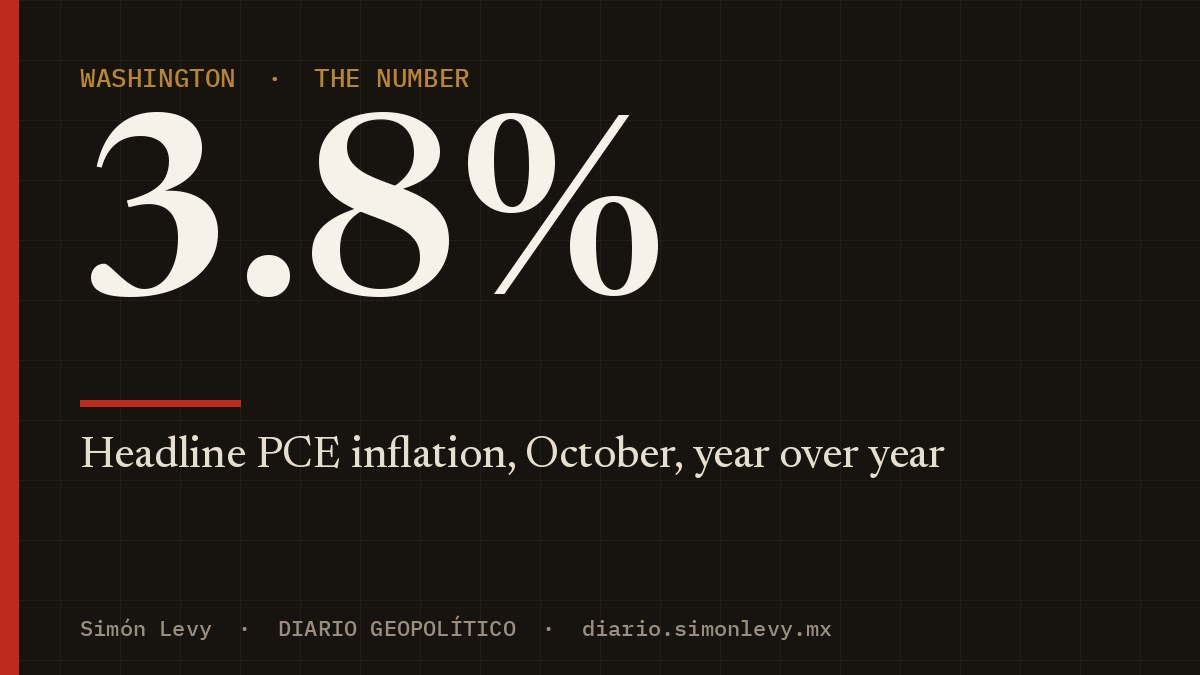
C. Why the date matters.The same morning, the Bureau of Economic Analysis reported that the personal consumption expenditures price index rose 3.8% from a year earlier in October, up from 3.7% in September. Core PCE, which strips out food and energy, rose 3.3%, above the 3.2% consensus, per the CappNotes market recap. The Federal Reserve under Chair Kevin Warsh raised rates in September for the first time since July 2023, to a range of 3.75% to 4%. Its next meeting is December 9 and 10. CME FedWatch put the odds of a quarter-point hike at 97.8% after the data.
The legal path.This is the tariff route that survived. In February the Supreme Court struck down the emergency “Liberation Day” tariffs; roughly $100 billion of the $166 billion collected is to be refunded, Fortune reported. Section 301 requires an investigation, a finding of unfair practice and a public process. Trade analyst Dmitry Grozoubinski told Al Jazeera these are “probably the most legally robust” of Trump’s tariffs. Court challenges are still expected.
The numbers behind the targets.Imports from China reached $215 billion through September and from Vietnam $204.8 billion, per Census data cited by Fortune. The trade deficit with Vietnam, $190.9 billion, is the largest with any country. China accounts for 7.8% of U.S. imports and Vietnam 7.4%. The sectors named include Chinese steel, aluminum, electric cars, appliances and solar panels, Japanese and Chinese autos, and Singapore’s computer chips.
Who pays first.The legal incidence of a tariff falls on the U.S. importer of record, the company that clears the goods through Customs and Border Protection. That company decides how much to absorb, how much to pass to retailers and how much to push back to the foreign supplier. In a quarter when core PCE is already rising 0.3% a month, the room to absorb is thin.
What the list leaves out.Mexico and Norway were investigated and spared. Norway’s fuel and seafood exports had been cited in the probe. Mexico’s exclusion matters for supply chains: a part made in Monterrey now carries no new Section 301 layer, while the same part made in Ho Chi Minh City or Penang could. That gap rewards nearshoring at the exact moment Washington is asking allies to cut capacity.
The political clock.Democrats take control of both chambers in January. A Section 301 action does not need a congressional vote, but the new committee chairs in Ways and Means and Senate Finance will control hearings and subpoenas. A Reuters/Ipsos poll found 62% of Americans would support scrapping trade tariffs, Al Jazeera reported.
The names.Greer runs the case at USTR. Warsh decides what the Fed does with it on December 10. Stephen Miller became White House chief of staff days after the midterms. On the other side of the table: the U.S.-China truce, which caps China at 20%, expires on January 10, and India’s deal, outlined in February, is still not signed; Foreign Minister S. Jaishankar said on November 14 it “could be sealed soon.”
Markets.The S&P 500 fell as much as 3.2% intraday and closed down 0.25% at 7,182.78. The Dow erased a loss of more than 1,100 points and closed up 0.33% at 50,182.95. Asia took the hit: South Korea’s Kospi fell 6.16% and Taiwan’s Taiex 4.80%. Mexico’s IPC rose 2.99% on relief that Mexico was spared.
Two clocks now run against each other. The tariff clock starts with a Federal Register notice and a comment period. The rate clock ends on December 10. A tariff proposed on a hot-inflation day makes a hike easier to justify and harder to reverse, and the bill lands on importers before any foreign producer cuts capacity.
The legal choice is the signal: after losing in court on emergency powers, the administration moved to the statute with the longest record of surviving judges. The ceiling of $83.96 billion on China and Vietnam alone is close to the roughly $100 billion owed back.
What is still missing.The Federal Register notice, the final rate for each economy, the list of covered products, and the hearing calendar. Without them, no importer can price the cost, and no court can review it.
The problem, in simple terms.The U.S. government accused Huawei, one of the world’s largest telecom companies, of lying to banks to hide business in Iran, of stealing trade secrets and of running all of it as a criminal enterprise. A jury in Brooklyn agreed with most of the case, but not with that last idea.
A. The verdict.A federal jury in the Eastern District of New York found Huawei guilty on 10 of 12 criminal counts and not guilty of racketeering conspiracy, according to the Times of Israel liveblog of November 25 and the FDD overnight brief of the same day. The verdict came Tuesday, November 24.
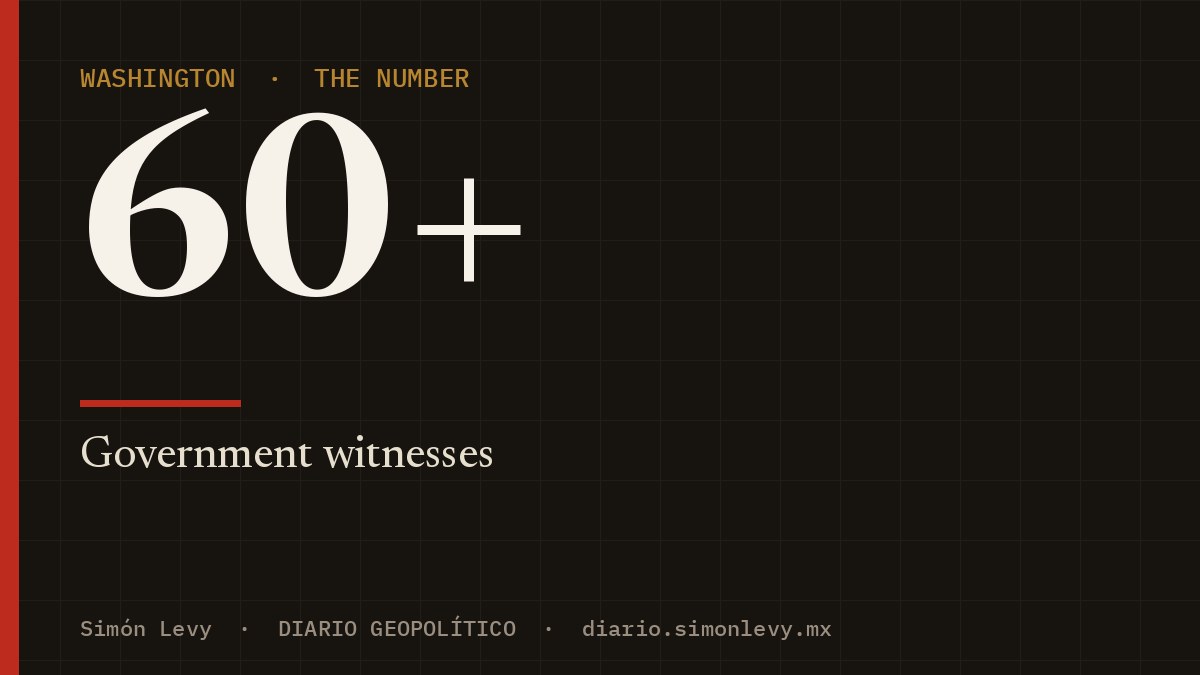
B. The trial.It lasted more than two months. Prosecutors called more than 60 witnesses and the defense 15. Judge Ann Donnelly presided, according to Fierce Network. In closing arguments on November 17, Assistant U.S. Attorney Meredith Arfa said Huawei acted “for a competitive advantage to grow and protect its business,” according to AP. Defense attorney Brian Heberlig told jurors prosecutors “began with guilt and worked backwards.”
C. What was charged.The indictment, first unsealed in 2019, covered racketeering, fraud, theft of intellectual property and sanctions violations against Huawei and three subsidiaries, according to AP. No espionage charge was brought in Brooklyn, Fierce Network noted. Huawei has been on the Commerce Department’s trade blacklist since 2019.
The reaction.Huawei said it will “take all necessary legal actions,” per the Times of Israel report. Chinese officials have described the prosecution as “economic bullying,” according to AP.
Why the split verdict matters.Racketeering conspiracy requires proof of an enterprise and a pattern of crimes. The jury accepted individual counts but not the enterprise. In practice, that limits how far prosecutors can stretch the case to people and affiliates not named in the counts of conviction, and gives the defense a theme for appeal.
The bank angle.The fraud theory at the center of the case is that Huawei misled global banks about its control of a company doing business in Iran, exposing those banks to U.S. sanctions risk. A conviction on that theory is the kind of court record compliance officers cite when they exit a client relationship or refuse a correspondent payment.
The Washington week.The verdict came one day after Commerce added Singapore’s Megaspeed to the Entity List over chip diversion risk and the same week Nvidia reinstated Jensen Huang after what its filing called input from senior levels of government. Attorney General Todd Blanche said Wednesday he will not investigate Huang. Technology policy toward China is now being made in courtrooms, export lists and boardrooms at once.
The open questions.The sentencing date and the penalty sought were not public in the sources reviewed by the Daily. A corporation cannot go to prison; penalties for a company are fines, forfeiture and probation conditions.
The racketeering acquittal is the headline Beijing will use, and the fraud convictions are the headline banks will use. Both are true. For U.S. policy, the conviction gives Commerce and Treasury a court record to cite in future designations of Huawei affiliates.
What comes next in court.After a verdict, the defense typically files motions asking the judge to set aside the convictions or order a new trial, and the government responds before any sentencing. Only after judgment can Huawei appeal to the U.S. Court of Appeals for the Second Circuit. A corporate penalty can include fines tied to the gain from the offenses, forfeiture of proceeds and a court-supervised compliance program. None of those numbers is public yet, and the Daily will not estimate them without a filing.
The diplomatic cost.Beijing treats the Huawei prosecutions as a symbol, not a legal matter. The verdict lands as China extends its pause on some critical-mineral export curbs only until January, giving Beijing a lever if it decides to answer the verdict and the new 20% tariff together.
Context.The verdict arrived the same week USTR proposed a 20% excess-capacity duty on China and as the U.S.-China truce heads toward its January 10 expiration.
PCE 3.8% and a December hike at 97.8%.
The problem, in simple terms.The Federal Reserve targets 2% inflation. The gauge it watches most closely, the PCE price index, rose 3.8% in the year to October. Prices are not slowing, and the economy is not cooling. That is the setup for a rate hike.
A. The data.Headline PCE rose 3.8% year over year in October, up from 3.7% in September, according to the Bureau of Economic Analysis figures reported by Fortune and CappNotes. Core PCE rose 3.3%, above a 3.2% consensus. Month over month, core rose 0.3% for the third consecutive month, per the Motley Fool. Consumers expect 3.9% inflation a year from now and 3.3% in three years, according to the New York Fed’s October survey cited by Fortune.
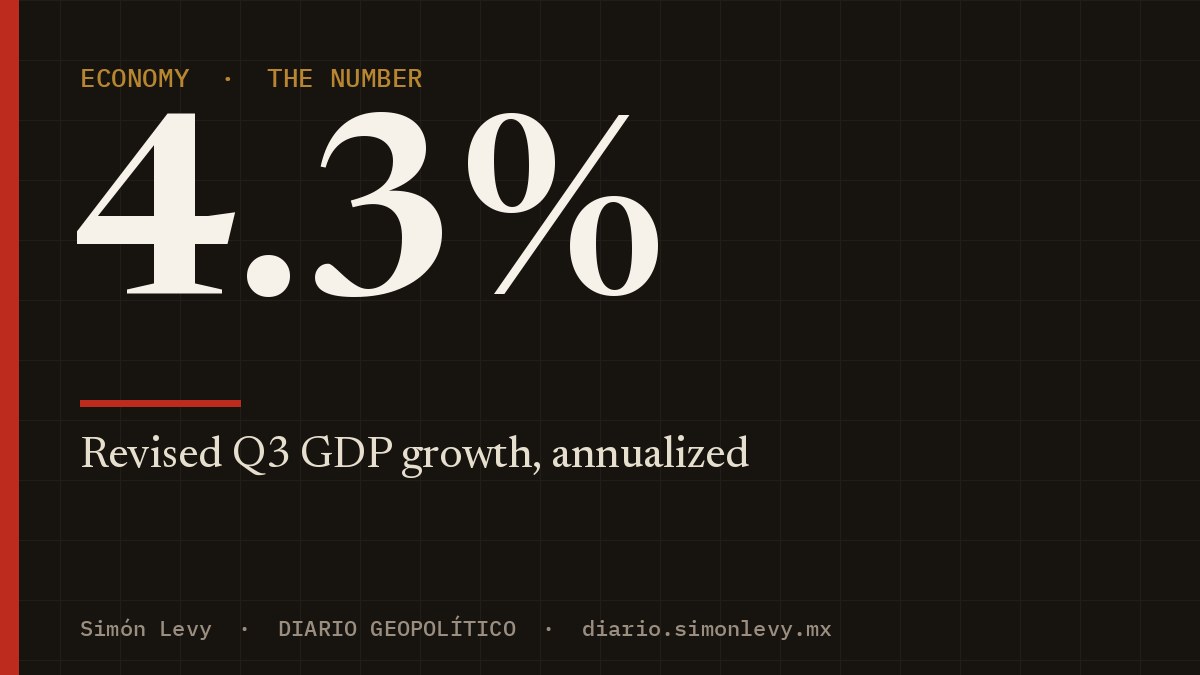
B. Growth is not helping.Third-quarter GDP was revised up to a 4.3% annual rate from 3.4%. The Beige Book reported growth in eight of 12 districts, with prices still rising moderately, per CappNotes.
C. The Fed.Chair Kevin Warsh’s Fed raised rates in September to 3.75% to 4%, its first increase since July 2023. The next decision is December 10. After the data, CME FedWatch priced a quarter-point hike at 97.8%; Polymarket showed 94% and Kalshi 93%, per CappNotes. UBS economist Paul Donovan told Fortune the concern is “the impact on U.S. inflation, and thus U.S. interest rates.”
The intraday scare.The S&P 500 dropped as much as 3.2% and the Nasdaq as much as 4.6% before a late comeback. The S&P closed down 0.25% at 7,182.78, the Nasdaq down 0.62% at 23,585.80, and the Dow up 0.33% at 50,182.95. The VIX closed at 28.29 after topping 30 in the morning. Small caps rose: the Russell 2000 gained 0.71%.
Rates and commodities.The 10-year Treasury yield closed at 4.85%, down 6 basis points per CappNotes; the Motley Fool reported 4.91%. WTI crude settled at $83.68, up 1.99%, and Brent at $94.61, up 3.51%, after a Houthi strike on Saudi Arabia’s Ras Tanura refinery. Gold settled at $3,534.70, down 0.71%, per CappNotes.
Who moved.Nvidia fell 3.91% after S&P Global placed its AA rating on CreditWatch negative, per CappNotes. Materials led sectors, up 2.07%; technology lagged, down 0.83%.
Why core matters more than headline.Headline PCE includes energy, which swings with oil. Core strips out food and energy and shows the underlying trend. Three straight months of 0.3% core gains annualize to roughly 3.7%, well above the 2% target, by the Daily’s arithmetic. That is the figure Fed officials quote when they argue against waiting.
Where the tariff enters.Former Chair Jerome Powell described tariffs as “a one-off price increase,” while noting they raised near-term expectations, according to Fortune. Janus Henderson portfolio manager Bradford Smith told Fortune additional tariffs “will make the Fed’s job more difficult.” The new Section 301 layer would hit goods from 14 economies that together supply a large share of U.S. consumer imports.
What the bond market said.Yields fell across the curve despite the hot data: the 2-year closed at 4.61%, down 2 basis points, and the 30-year at 5.24%, down 6, per CappNotes. Investors bought Treasuries as a refuge during the morning sell-off, which partly offset the inflation signal.
The comeback hides the message. A market that falls 3.2% intraday on an inflation print and a tariff headline is pricing two risks at once: a higher policy rate and a higher cost floor. Oil at $83.68 adds a third. The Fed has two weeks and no soft data to lean on.
The calendar.Markets are closed Thursday for Thanksgiving. Friday stocks close at 1 p.m. ET and bonds at 2 p.m. ET, with advance goods trade and inventory data at 8:30 a.m. ET.
Ras Tanura hit; Brent +3.51%.
The problem, in simple terms.The United States is at war with Iran and blockading its oil. Iran’s allies in Yemen, the Houthis, are hitting Saudi Arabia, the largest U.S. partner in the Gulf. Each strike on Saudi oil raises the world price.
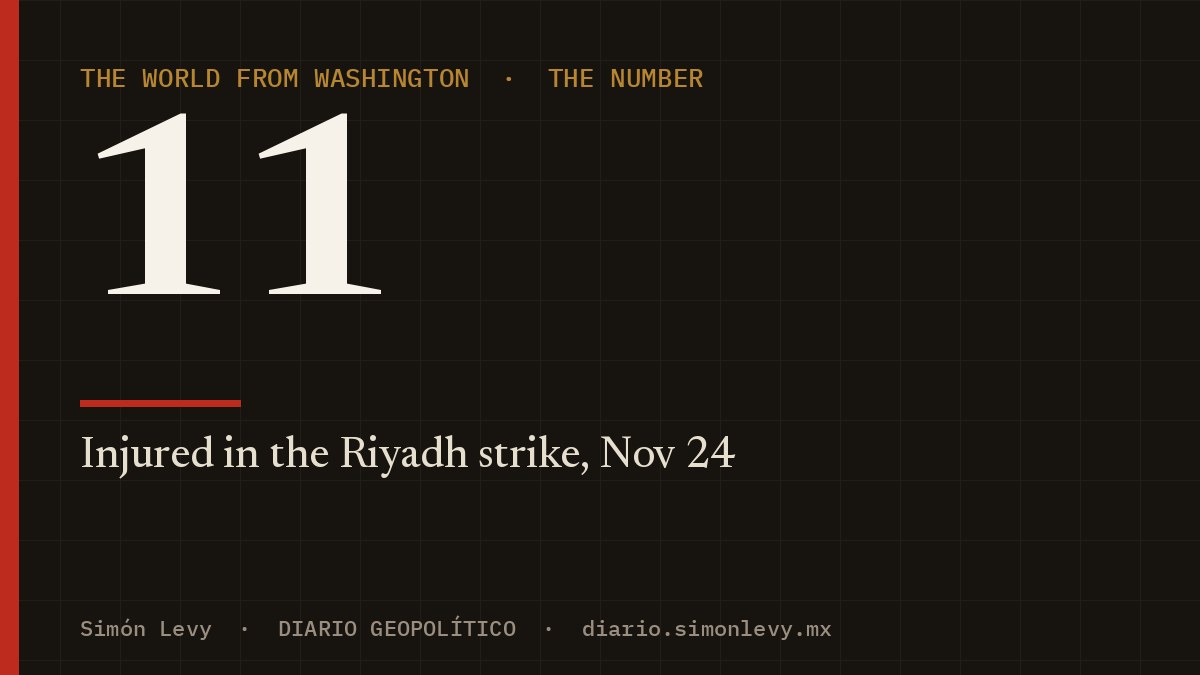
A. The strikes.The Houthis struck the Ras Tanura refinery, with capacity of “over a half-million barrels per day,” and a Riyadh skyscraper that houses the kingdom’s sovereign wealth fund, according to Democracy Now’s November 25 headlines. The Riyadh strike on Tuesday injured 11. The Saudi-backed coalition hit Hodeidah port in response.
B. The escalation.On November 25 the Houthis said Jeddah and all Saudi Red Sea ports would be targeted if Hodeidah is attacked, and the Saudi-led coalition issued an evacuation warning for Hodeidah port, per Reuters as reported by the Times of Israel. On November 24 the Houthis reached 60 kilometers from Aden, and Britain designated the group under its Yemen sanctions regime and sanctioned four senior figures, per Reuters via FDD.
C. Washington’s file.U.S. special envoy Jared Kushner and Prime Minister Benjamin Netanyahu discussed Gaza humanitarian issues by phone on Tuesday; Kushner had warned Israel is trending toward becoming a “global pariah,” per the Times of Israel. The Cipher Brief reported on November 25 that the administration is considering targeted killings of Iranian leaders. In Gaza, the Health Ministry declared a meningitis epidemic alert on Tuesday.
Ukraine.Russian President Vladimir Putin vowed retaliation for Ukrainian strikes on energy sites; at least 14 refineries have been hit since the start of November despite Trump’s “explicit request” to Kyiv, per Democracy Now. Bloomberg reported that President Zelenskyy will reach out to the new Democratic Congress if Trump fails to end the war by year’s end.
What Ras Tanura is.The complex on Saudi Arabia’s Gulf coast is one of the kingdom’s largest refining and export hubs. A strike there affects refined products such as diesel and jet fuel, not only crude, which is why European and Asian buyers react first.
The blockade link.The U.S. blockade of Iranian oil shipping and the Houthi campaign against Saudi Arabia are two sides of one confrontation. Every barrel the Houthis threaten in the Red Sea adds to the barrels already removed by the blockade, and the replacement supply comes from producers outside the Gulf, including the United States, Guyana and Brazil.
Israel and Iran.Israeli Defense Minister Israel Katz said Iran is developing chemical weapons, per AFP via FDD on November 24. A Board of Peace representative blamed Netanyahu for stalling the Gaza plan, per Bloomberg. Gadi Eisenkot’s Yashar party agreed to sign a coalition pact with a right-wing opposition party, per Reuters.
China.China extended its suspension of some critical-mineral export curbs to the United States “until January,” per FDD citing press reports, the same month the U.S.-China truce runs to January 10.
Who in Washington decides.The response to the Houthis runs through the Pentagon’s Central Command, the State Department’s terrorism designations and Treasury’s sanctions office. Kushner holds the Gaza and Iran negotiating files. A new Democratic Congress in January will inherit war powers questions on Iran, Yemen and the Red Sea that the current Congress never put to a vote.
The number to watch Friday.Oil trades in a thin holiday session on Friday. If the Houthis act on the threat to Jeddah, the spread between Brent and WTI, $10.93 at Wednesday’s settlement by the Daily’s arithmetic, is the fastest gauge of how much of the shock stays outside the United States.
Three fronts now feed one price. Houthi strikes lift Brent, Ukrainian strikes cut Russian refining, and the U.S. blockade removes Iranian barrels. The beneficiary is the producer outside the war zone, and the payer is the importer inside it.
Abrego Garcia in Spain; Ecuador operations paused.
The problem, in simple terms.In March 2025 the U.S. government sent Kilmar Abrego Garcia, a Salvadoran living in Maryland, to El Salvador’s CECOT mega prison. The government later admitted the removal was an administrative error. His case became the clearest test of whether courts can make the executive undo a deportation.
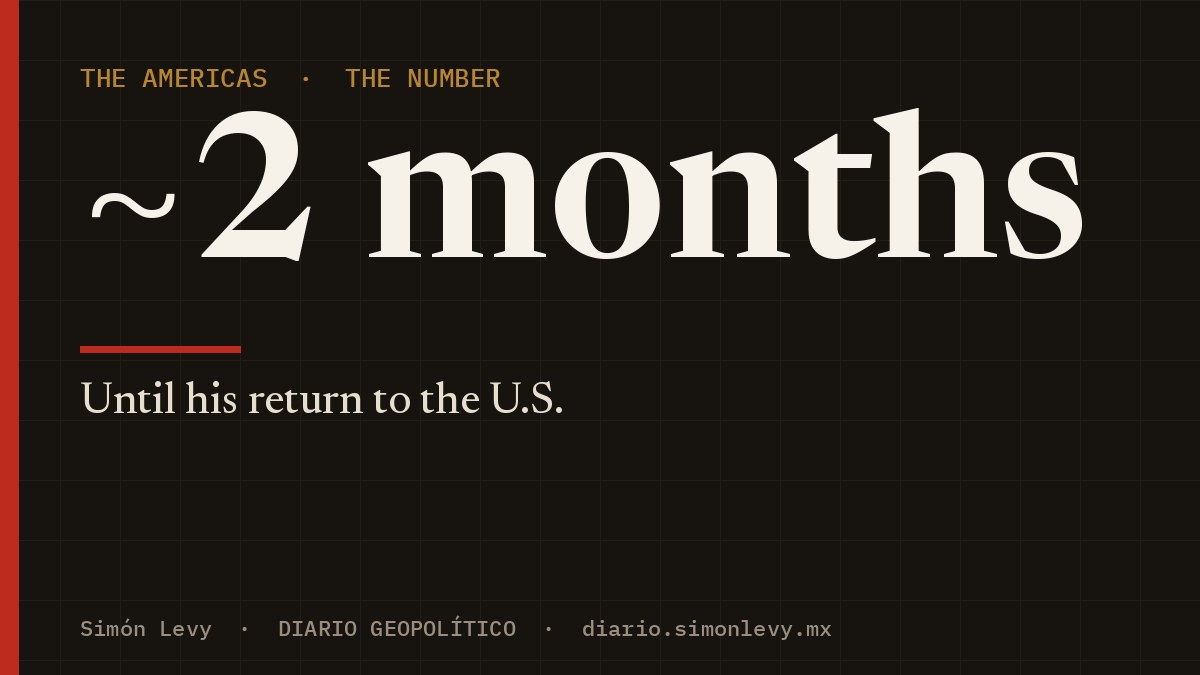
A. The exit.Abrego Garcia arrived in Spain after leaving the United States, Democracy Now reported on November 25. On November 24, a federal judge allowed him to arrange his own departure, according to reports summarized by FDD. Sen. Chris Van Hollen, Democrat of Maryland, had visited El Salvador to press for his release in 2025.
B. The path.He was returned to the United States about two months after his removal to CECOT, according to Democracy Now. On December 11, 2025, a federal judge ordered his release from immigration detention, Al Jazeera reported. In February 2026 a federal judge blocked new efforts by the administration to re-arrest him, according to Democracy Now.
C. Ecuador.The administration paused joint military operations with Ecuador while it investigates a lethal Ecuadorean operation, Reuters reported on November 24, citing The New York Times. U.S. and Ecuadorean forces launched joint anti-narcotics operations in March 2026, Al Jazeera reported at the time. Members of Congress had already demanded a halt over abuse allegations.
Venezuela.Venezuela’s interim authorities disclosed national debt of $237 billion, according to press reports on November 24, a number that will frame any U.S. debt restructuring talks and the oil licenses now under Senate scrutiny.
Why Spain.The government’s earlier attempts to remove Abrego Garcia to third countries ran into court limits on re-detention and on removal to places where he could face harm. A departure he arranges himself avoids a contested removal order. Spain is the second high-profile exit from U.S. custody to Madrid this week, a pattern worth watching for how Washington resolves politically costly cases without a deportation flight.
What CECOT means for policy.The mega prison in El Salvador became the symbol of the 2025 deportation campaign, under an agreement between Washington and President Nayib Bukele’s government. Abrego Garcia’s case was the first in which the government acknowledged an error, and the courts’ orders in his case are now cited in other challenges.
The Ecuador file.Ecuador is the template the Pentagon has used for joint ground operations against cartels designated as terrorist organizations. A pause pending an investigation means U.S. support, intelligence sharing and joint raids are on hold. Under the Leahy laws, U.S. assistance cannot go to foreign security units credibly implicated in gross violations of human rights.
Cuba.WHO Director-General Tedros Adhanom Ghebreyesus called for lifting the U.S. fuel blockade on Cuba, per Reuters on November 24, adding international pressure on a policy run from Washington.
Cartagena.Armed men still held at least 20 hostages in Cartagena, Colombia, after releasing 10, per Reuters on November 24.
The number behind the disclosure.A debt of $237 billion is the starting point for any creditor talks, and U.S. investors hold a share of defaulted Venezuelan bonds. Any restructuring requires licenses from Treasury’s Office of Foreign Assets Control, which makes the disclosure a Washington matter as much as a Caracas one.
For Latino voters.The Abrego Garcia case drew national attention to how Washington handles deportations to Central America, and the incoming Democratic majorities have said immigration enforcement will be a focus of oversight in 2027. Hearings on CECOT transfers, on detention contractors and on third-country removals are likely early items for the new committees.
Two files, one pattern: when Washington’s hemisphere policy is tested in a courtroom or by an ally’s conduct, it slows down. The Ecuador pause and the Abrego exit both came from scrutiny, not from a policy announcement.
Semaglutide in children under 12.
The problem, in simple terms.Obesity in young children often continues into adulthood, along with diabetes and heart risk. Drugs like semaglutide, sold as Wegovy, are approved for adults and teenagers. Until now, there was no large trial in children under 12.
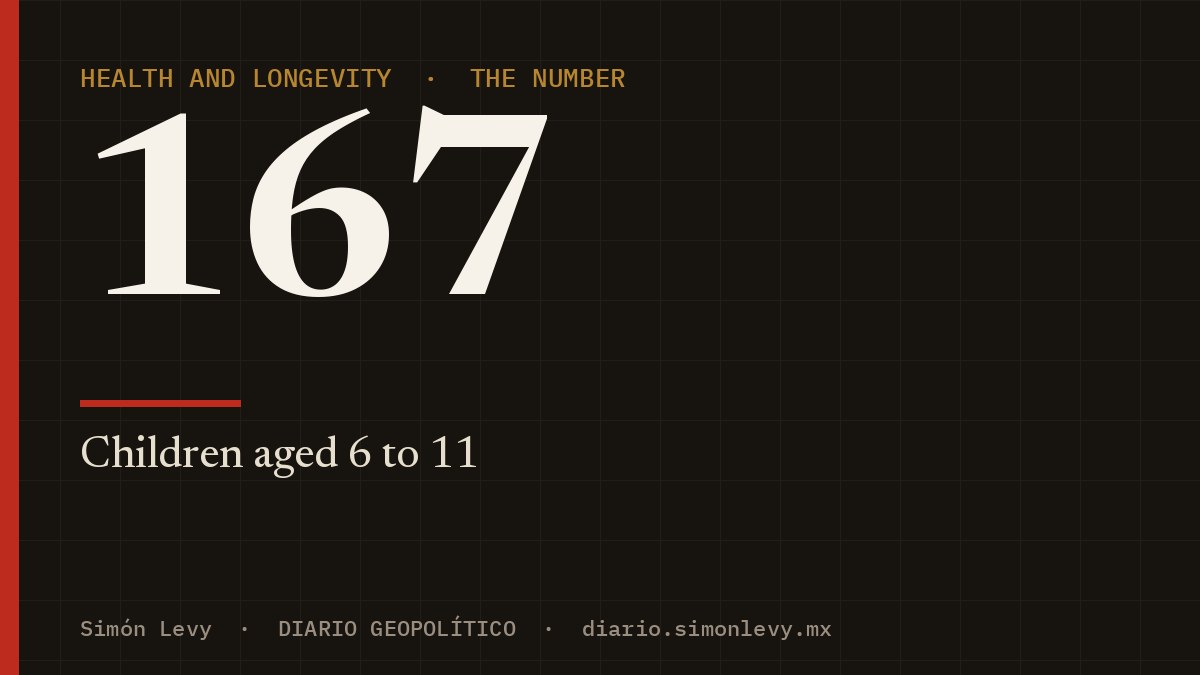
A. The study.STEP Young was a double-blind, multinational trial of 167 children aged 6 to under 12, randomized 2 to 1: 112 to semaglutide and 55 to placebo, both with lifestyle counseling, according to Contemporary Pediatrics and Becker’s Hospital Review. It ran 104 weeks plus a 7-week washout. The paper appeared in the New England Journal of Medicine on November 16 and was presented at ObesityWeek in National Harbor, Maryland. The lead author is Ania M. Jastreboff of the Yale School of Medicine.
B. The results.At week 68, BMI fell 13.5% with semaglutide and rose 2.7% with placebo, a difference of 16.2 percentage points. At week 104 the difference was 17.8 points: minus 9.4% against plus 8.4%. At week 68, 38% of treated children fell below the 95th BMI percentile, against 2% on placebo, per Healio.
C. Safety.Adverse events occurred in 96% of treated children and 93% on placebo. Serious events were 9% in both groups. Vomiting reached 70% against 29%, diarrhea 62% against 35% and nausea 58% against 24%, according to Healio. Investigators reported no effect on puberty or bone density.
Levels of evidence.Confirmed: a randomized, double-blind trial published in a peer-reviewed journal. Limits: 167 children, funded by Novo Nordisk, and off-drug follow-up still pending. Not known: long-term effects past two years, and whether weight returns after stopping.
How this fits the evidence.Semaglutide was approved for adolescents 12 to 17 in December 2022 after the STEP TEENS trial. STEP Young extends the question to younger children. The American Academy of Pediatrics’ 2023 guideline allows medication as an adjunct from age 8, and World Health Organization guidance from October covers ages 10 to 11, according to Healio.
What the side numbers show.Waist size fell 8.5 cm with semaglutide against a 2.7 cm gain with placebo, and systolic blood pressure fell 4.4 mm Hg against 0.9, per Healio. In a subgroup with prediabetes, 93% reached normal HbA1c against 56% on placebo. Psychiatric adverse events were similar: 21% against 24%.
What to ask the doctor.Whether a structured family lifestyle program has been tried, what the child’s growth curve shows, how nausea and vomiting would be managed, how long treatment would last, and what happens after stopping. Data on 26 weeks off the drug are still to come.
A warning on supply.Compounded and online versions of GLP-1 drugs are not FDA-approved products. Their quality is not verified by the FDA, and they have no studied dose for children.
Regulatory status.Wegovy (semaglutide) is FDA-approved for adolescents 12 and older and for adults. It is not approved in the United States for children younger than 12. This article does not recommend any medicine or dose.
What the trial does not tell you.STEP Young was not designed to measure heart attacks, diabetes cases or life expectancy decades later. It measured BMI, body composition in a subgroup, blood markers and side effects over two years. Longevity claims for children on these drugs are not supported by this trial, and any product marketed with such claims should be treated with suspicion.
Cost and access.Coverage of GLP-1 drugs for children depends on the insurer, Medicaid program and FDA label. Without an approved indication for children under 12, any use would be off-label, and many plans decline to pay for off-label weight-loss prescriptions. Families should ask both the doctor and the plan before assuming access.
The trial answers whether the drug works in young children. It does not answer for how long a child would need it, which is the question families will face first.
What I said, when I said it, and what happened.
Proof: Resolved by the 2028 Republican nomination. →
PendingProof: AP projected the Senate for Democrats on election night. After AP called Alaska for Mary Peltola on November 17, the incoming Senate stands at 56 Democrats to 44 Republicans (OPB, Nov 17, 2026), with Michigan Democratic. →
MissedProof: Called the House: AP projected Democratic control on November 4. The range fell short: NBC News estimates 258 Democratic seats and CBS News up to 259, with 231 already projected. →
Called itProof: He landed in Opa-locka, Miami, and publicly thanked Javier Milei.
Called itMy books, my courses and the tools I made so you can understand, protect yourself and earn. Free for my Patreon community.
Escudo, Courses, Longevity, Cónsul, CIES and Tratado, together in one place. Installs straight from your phone’s browser.
Open PosibleCheck people, companies, phone numbers and accounts against the U.S. Treasury, Mexico’s SAT and UN lists before you pay, sign or hire.
Check nowLearn to earn with artificial intelligence and your own talent. We give 100 scholarships every month.
EnrollIt is not a book about China. It is a book about your future. In English.
Building a future that delivers more than it promises. In Spanish.
From the wasteful state to the generator of public wealth. In Spanish.
Join my Patreon. That is where I publish what I publish nowhere else.
Join on PatreonEverything else that matters today, in brief.
Attorney General Todd Blanche said Wednesday he won’t investigate Jensen Huang; asked if he had, he said “For what?” (Democracy Now, Nov 25).
A federal judge permanently blocked the administration from punishing people for sharing evidence with the ICC, calling the order a content-based restriction on speech (Democracy Now, Nov 25).
U.S. intelligence agencies, including CIA and ODNI, were hit by a hack of an unclassified system (The Cipher Brief, Nov 25).
Gov. Kim Reynolds declared a disaster emergency in three counties before the Army detonated nearly five tons of explosives at Middletown (Democracy Now, Nov 25).
Third-quarter GDP was revised to a 4.3% annual rate from 3.4% (CappNotes, Nov 25).
Seoul fell 6.16% and Taipei 4.80% as the tariff list landed; Mexico’s IPC rose 2.99% (CappNotes, Nov 25).
North Korea ordered Switzerland’s head of diplomatic office to leave within 48 hours (Reuters via FDD, Nov 25).
Venezuela’s interim authorities disclosed national debt of $237 billion (press reports via FDD, Nov 24).
In February the Supreme Court struck down the emergency tariffs. Roughly $100 billion of the $166 billion collected is owed back to importers, Fortune reported. No outlet set that refund next to Wednesday’s Section 301 list.
Imports from China ($215 billion) and Vietnam ($204.8 billion) through September total $419.8 billion. A 20% layer on both, the rate reported for China and the deal rate for Vietnam, yields a static ceiling of $83.96 billion a year, or 84% of the refund bill, from just two of the 14 economies.
The ceiling overstates real revenue: importers switch suppliers, and for most of the 14 existing Section 301 duties count toward the new rate. But the order of magnitude explains the choice of statute. Section 301 is the instrument that can replace the money the Court cut off, and the one analysts call the most legally robust. Calculation by Diario Geopolítico.